

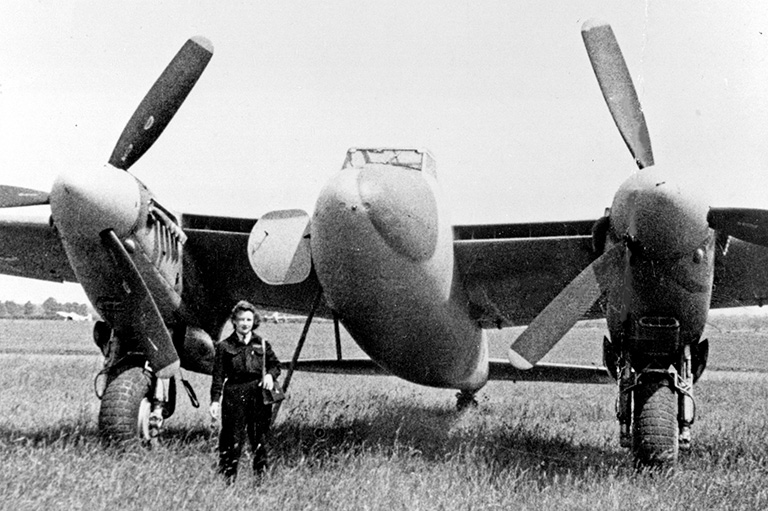
Across hangars, control towers, engineering labs, and executive offices throughout the country, Canadian women have shaped the evolution of aviation and aerospace.
At the KF Centre for Excellence, we believe celebrating these pioneers is about more than honouring the past – it is about inspiring the next generation of aviation professionals. Their stories remind us that progress is built by those willing to step forward, prepare rigorously, and lead with excellence.
As we mark Women in Aviation Week and prepare for our upcoming Celebrating Okanagan Women in Aviation fireside chat, we are proud to spotlight the Canadian women whose determination expanded what was possible in aerospace, and whose legacy continues to influence the industry today.
Early Trailblazers Who Opened the Sky
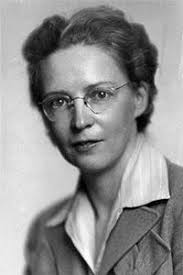
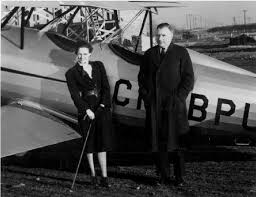
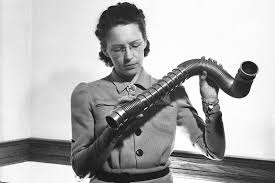
Elsie MacGill
In the early 1900s, engineering was not a field designed with women in mind. When Elsie MacGill enrolled in aeronautical engineering, she wasn’t simply choosing a profession, she was stepping into territory few women had ever entered and quietly redefining who was permitted to lead in technical spaces. Then came war. During the Second World War, MacGill became Chief Aeronautical Engineer at Canadian Car and Foundry, where urgency defined every decision. Production lines moved at relentless speed. Hawker Hurricanes were needed for the Allied war effort, and failure was not an option. Under her leadership, more than 1,400 fighter aircraft were built. She introduced design improvements to enhance cold-weather performance, streamlined production processes, and managed complex manufacturing teams during one of the most demanding periods in aviation history. Her authority was not symbolic, it was operational. They called her the “Queen of the Hurricanes,” not because she was the only woman in the room, but because she was the engineer in charge. In proving her expertise under pressure, MacGill demonstrated something enduring: technical excellence does not have a gender.
Rosella Bjornson
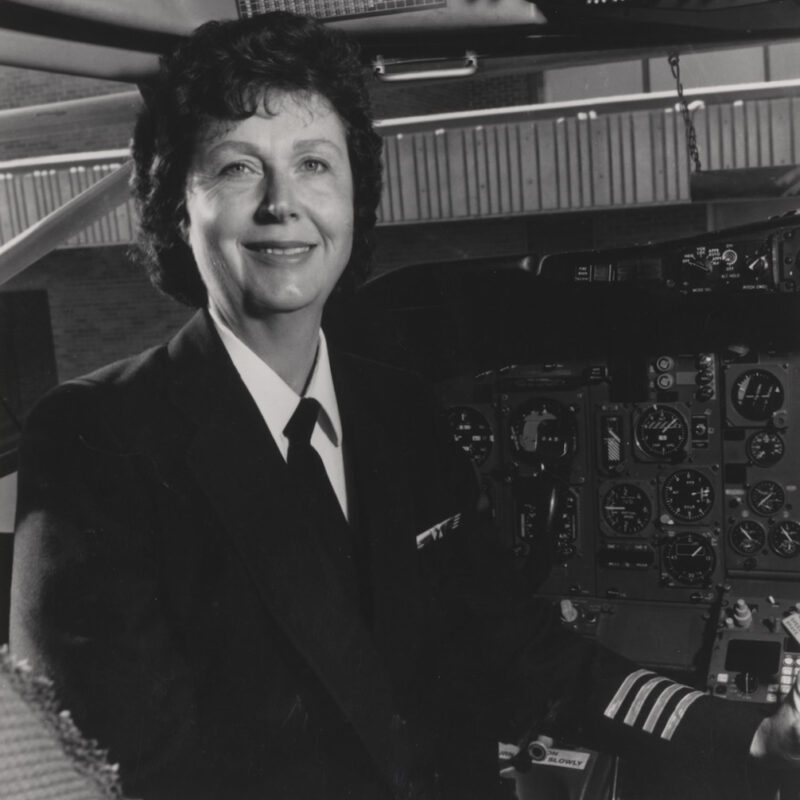
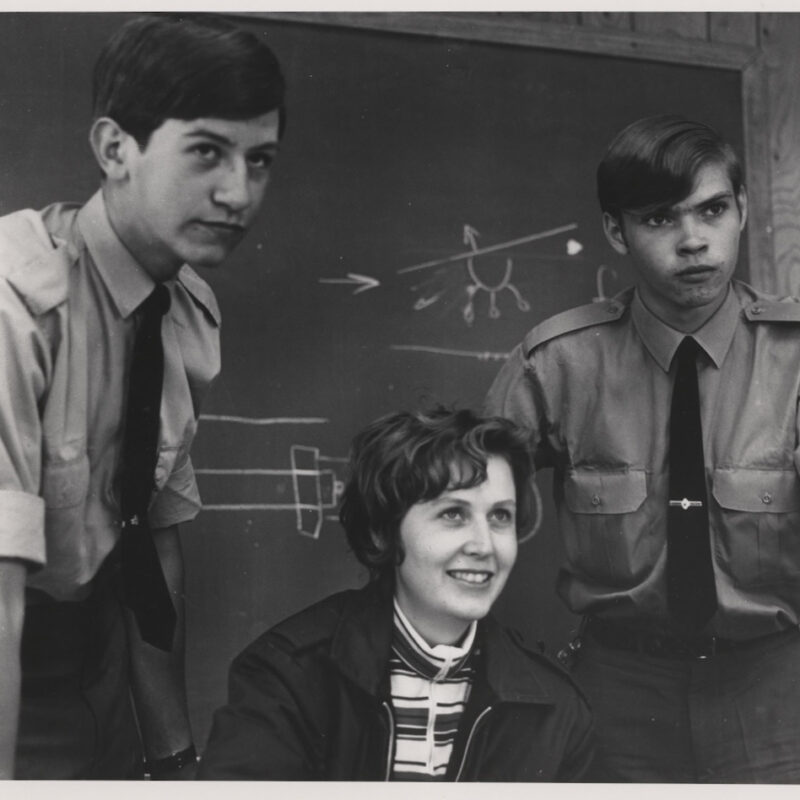
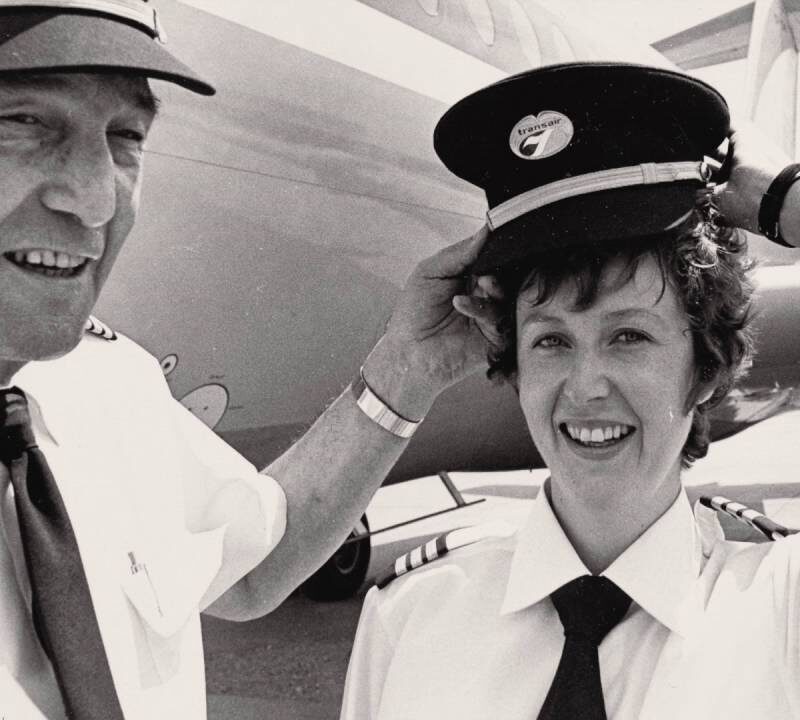
In 1973, when passengers boarded an Air Canada flight and learned that one of their pilots was a woman, it caused a moment of hesitation for some. The commercial flight deck had long been viewed as a space reserved for men, not by formal regulation, but by deeply rooted assumption. Rosella Bjornson did not enter that cockpit to challenge those assumptions; she entered because she had earned her place there. She trained rigorously, accumulated flight hours, and met every technical standard required of a commercial airline pilot. When Air Canada hired her, she became the first female commercial airline pilot in Canadian history. Over the course of her career, she logged more than 20,000 hours in the air, flying aircraft including the DC-9 and Boeing 737. She navigated demanding weather systems, complex airspace, and the steady responsibility that comes with carrying hundreds of lives at a time. Flight after flight, she did something quietly transformative: she normalized the sight of a woman in the left seat. By the time she retired, the novelty had disappeared and was replaced with respect. Her legacy is not simply that she was first, but that she made what once seemed extraordinary feel entirely ordinary.
Deanna Brasseur
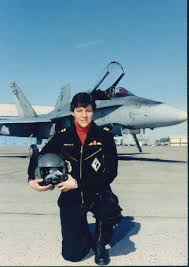
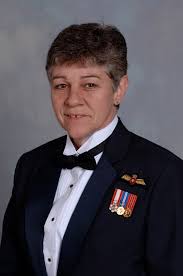
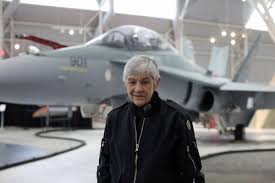
For years, combat aviation in Canada was closed to women. The aircraft were there. The training programs existed. The standards were clearly defined. But the door itself remained shut. In 1989, when the Canadian Armed Forces opened combat roles to women, the change was more than symbolic, it was an invitation to meet one of the most demanding standards in military service. Deanna Brasseur was ready. She had trained for the moment, prepared for the responsibility, and met the qualifications long before the opportunity officially arrived. Becoming one of Canada’s first female fighter pilots, she flew the CF-18 Hornet, a high-performance aircraft that demands precision, speed, and split-second decision-making. Fighter aviation allows no room for hesitation; it requires discipline, technical mastery, and unwavering confidence under pressure. She reinforced a powerful truth: capability is not defined by gender, but by preparation. By stepping forward when the door finally opened, she helped usher Canadian military aviation into a new era, one where excellence, not expectation, defines who belongs.
Julie Payette
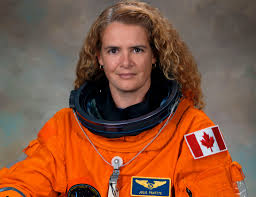
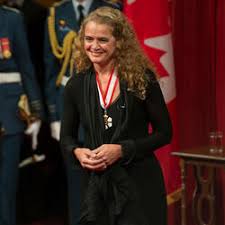
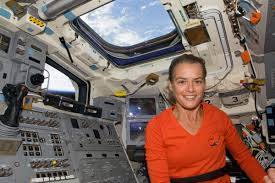
For some, aviation begins with lift-off and ends with landing. For Julie Payette, it extended far beyond the runway. Selected as an astronaut by the Canadian Space Agency in 1992, Payette entered one of the most competitive and technically demanding fields in the world. Her path there was deliberate, she was an engineer, a licensed pilot, and a specialist in robotics, prepared for complexity at the highest level. In 1999, she flew aboard Space Shuttle Discovery, becoming the first Canadian to board the International Space Station. A decade later, she returned to space aboard Endeavour, logging more than 600 hours beyond Earth’s atmosphere. Spaceflight is not symbolic; it is meticulous. Every calculation matters. Every movement is rehearsed. Every mission depends on collaboration, discipline, and technical precision. Payette operated Canadarm robotics, supported scientific research in orbit, and worked alongside multinational crews solving problems in real time, far from the safety of the ground. Her career reminds us that aviation does not end at the runway, it evolves. From aircraft design to satellite systems, from cockpit instrumentation to orbital robotics, aerospace is an expanding frontier. Payette’s journey reflects that expansion and the growing role Canadians play within it. For students walking through our Centre today, her story widens the lens: aviation is not a single pathway, but a spectrum of possibility, and sometimes, it leads to space.
Why This Legacy Matters Today
Canada’s aerospace sector continues to grow and modernize, creating sustained demand for skilled professionals, from aircraft maintenance engineers and pilots to avionics specialists, airport leaders, and aerospace innovators. At the KF Centre for Excellence, we see firsthand how powerful representation can be in shaping that future. When students walk through our hangars and stand beneath historic aircraft, when they hear the stories of women leading in maintenance, airport operations, rotary aviation, and flight decks, something shifts. The industry no longer feels distant or abstract – it feels accessible. Celebrating Canadian women in aviation is not simply about recognition; it is about building pathways. It is about visibility, access, and confidence. Most of all, it is about strengthening the aviation workforce of tomorrow here in the Okanagan and across Canada.
Continuing the Conversation in the Okanagan
During Women in Aviation Week, we are proud to host Celebrating Okanagan Women in Aviation, an intimate fireside conversation featuring local aviation leaders. By connecting students directly with professionals in our region, we strengthen career clarity, mentorship, and industry pride. Because the future of aviation depends on who we inspire today.
Discover the Wonder of Aviation at the KF Centre for Excellence